Cursor Moves Into GitHub's Territory
Cursor has spent the last few years fundamentally changing how developers write software with AI. Now it wants to change where that software lives.
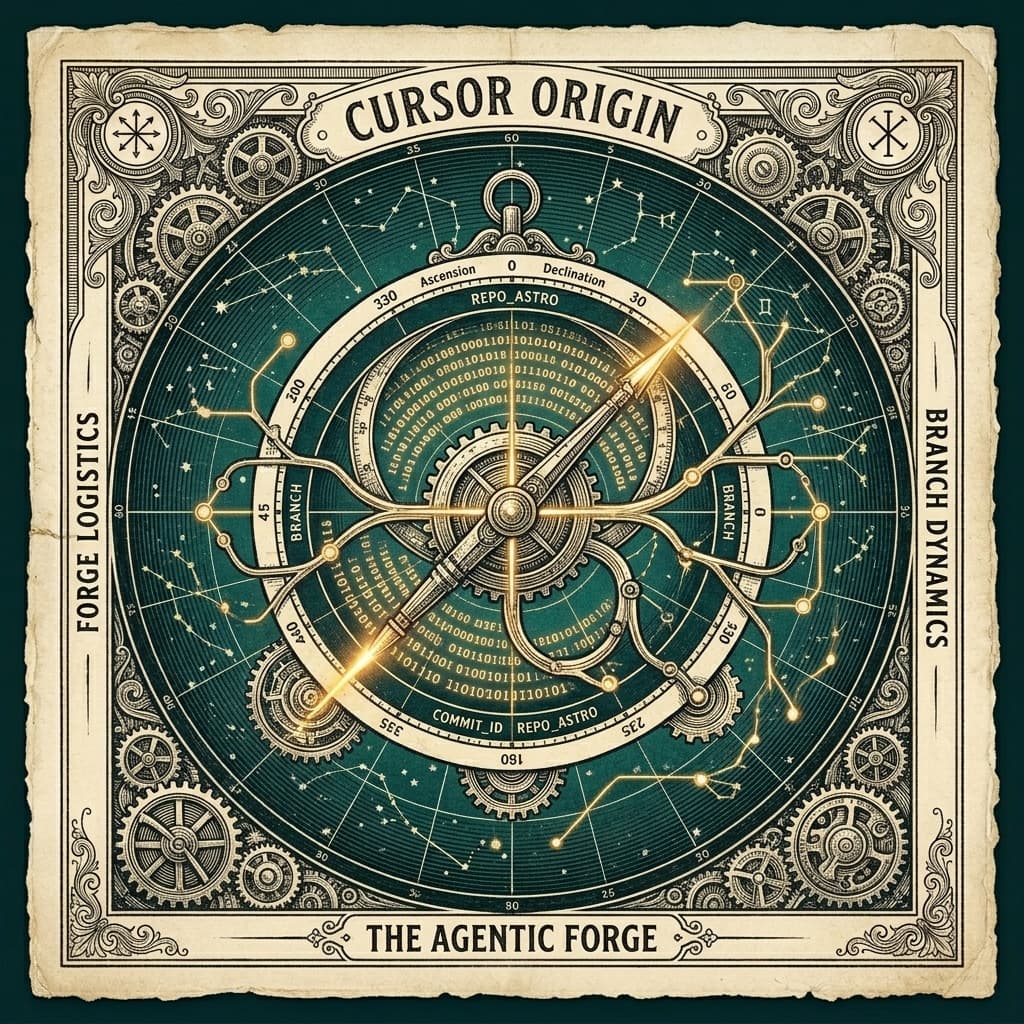
On August 17, 2026, Cursor officially launched Origin, a new Git-based code-hosting platform built directly into Cursor.
Origin is entering early beta across Cursor's paid tiers, offering native repository hosting, code browsing, code search, pull requests, automated checks, and bidirectional GitHub synchronization.
Calling Origin simply a “GitHub competitor” misses the more important shift. Cursor is building code hosting around a future where repositories are no longer operated only by human developers.
They are increasingly being worked on by developers and autonomous AI coding agents together. Origin is Cursor's attempt to build the foundational infrastructure for that future.
What Is Cursor Origin?
Origin is Cursor's native Git hosting platform. Cursor describes it as a Git forge designed for agent scale.
Developers can create a repository inside Cursor, push an existing codebase using standard Git CLI commands, browse syntax-highlighted files, execute semantic code search, review diffs, open pull requests, and manage access permissions.
Origin repositories live directly inside Cursor's Codebase environment. Instead of Cursor being solely the text editor while GitHub hosts the source code across the internet, Cursor now hosts the repository itself—bringing code millimeters away from the agents executing changes.
The Traditional Cursor Workflow Had a Boundary
Until Origin, a standard modern development loop involved a strict separation of concerns across multiple platforms:
Cursor could understand and modify local code, but another third-party platform remained authoritative for hosting, access control, and review coordination.
That separation was rational when AI acted merely as an in-line autocomplete assistant. But once autonomous coding agents can inspect full tasks, create isolated branches, edit multiple packages, run diagnostics, and draft pull requests, the repository itself becomes an active execution runtime.
Bringing the Repository Next to the Agent
Cursor's product philosophy centers around a clean thesis: your code should live directly beside the agents and pull requests working on it.
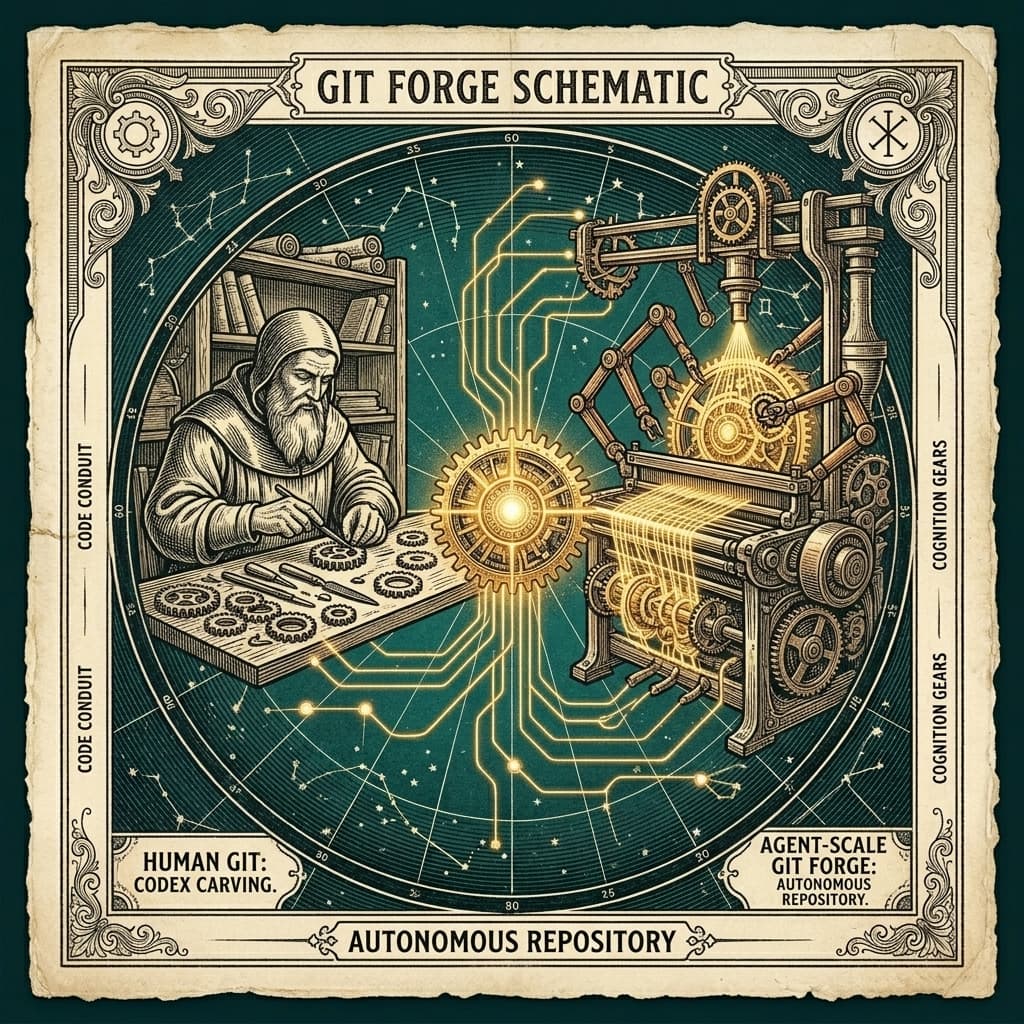
Origin allows Cursor Cloud Agents to interact directly with Origin remotes without relying on developer machine synchronization. Cloud agents can perform the full developer lifecycle:
The repository is no longer a passive file archive. It is an active execution substrate for autonomous software engineering.
From Intent to Merged PR: The Origin Execution Cycle
See how the boundary between editor, coding agent, repository forge, and deployment collapses.
1. Human Defines Intent & Task
Prompt: 'Refactor our authentication middleware to support JWT refresh rotation and add rate-limiting Redis checks.'
Cursor Is Not Asking Developers to Leave GitHub Yet
Rather than forcing developers into an all-or-nothing migration, Cursor introduced bidirectional GitHub synchronization.
Engineering teams can link their GitHub organizations, select specific repositories, and import synchronized mirrors into Origin. GitHub remains the authoritative source of truth, while Origin keeps the live copy updated in real time.
Why GitHub Sync Is Origin's Smartest Adoption Vector:
- Enterprises with thousands of existing GitHub repositories can adopt Cursor Origin with zero migration friction.
- Developers do not have to choose between GitHub OR Cursor; they get GitHub + Cursor Origin simultaneously.
- As developers spend 90%+ of their working day inside Cursor, the external GitHub web interface gradually recedes into the background.
Pull Requests Can Also Stay Connected to GitHub
The synchronization layer encompasses the entire review lifecycle: commits, checks, changed files, line comments, and merge controls.
A software engineer can draft or review a pull request entirely within Cursor, while teammates working in GitHub see the comments, status checks, and approvals synchronized seamlessly.
Why Is Cursor Moving Into Code Hosting?
Because AI coding is rapidly graduating beyond syntax autocomplete.
The first generation of AI developer tooling (GitHub Copilot v1) focused on completing the current line of code. The current generation of agentic systems takes high-level user stories, plans multi-file refactors, diagnoses failing unit tests, and packages deployable artifacts autonomously.
Once software agents participate in the end-to-end engineering lifecycle, the traditional boundaries between editor, agent, repository, code review, and deployment collapse. Cursor Origin is built to unite these layers under one unified control surface.
PRs as the Boundary Between Humans & Agents
Historically, pull requests served as a peer review mechanism between two human engineers. In an agent-native software paradigm, the pull request transforms into a critical verification and governance gate between autonomous generation and production environments.
Developers do not need to monitor every token an agent outputs in real time; they need robust, high-fidelity tooling to inspect, test, and approve the final pull request.
Origin Is Also Connecting CI and Deployment
Code hosting alone is insufficient without testing and deployment rails. At launch, Cursor highlighted first-class partner integrations:
Vercel
Automatic preview URLs attached directly to Origin pull requests.
Depot
High-speed remote Docker container builds and cached compilation.
Buildkite
Enterprise-scale continuous integration pipeline orchestration.
This Is Bigger Than Building Another GitHub
GitHub provides exceptionally mature repository infrastructure with decade-long network effects in open source, enterprise compliance, identity, and Actions.
Recreating GitHub feature-by-feature for traditional human workflows would be uninspired. The massive opportunity lies in building repository infrastructure for an entirely new software lifecycle where AI agents generate 80%+ of all commits and pull requests.
Traditional Git Forge (GitHub) vs. Agent-Scale Forge (Cursor Origin)
How developer infrastructure transforms when coding agents become primary software authors.
| Dimension | Traditional Git (GitHub) | Agent-Scale Git (Cursor Origin) |
|---|---|---|
| Primary Actor | Human developer writing 95%+ of code manually | Autonomous AI agents executing multi-file implementation tasks |
| Repository Role | Passive remote file storage and commit archive | Active execution environment next to the AI reasoning engine |
| Pull Request Purpose | Human-to-human peer code review | Safety & verification boundary between AI output and production |
| Commit & Branch Volume | Low frequency (3–8 commits per developer per day) | High frequency (hundreds of parallel agent iterations) |
| CI/CD Integration | Triggered asynchronously after manual push | Streaming instant preview deployments (Vercel/Depot) during agent execution |
| Ecosystem Strategy | Walled garden requiring full repository lock-in | Seamless two-way GitHub sync with non-disruptive onboarding |
Why GitHub Sync Is Origin's Most Important Feature
GitHub sync is far more than a migration bridge. It shifts the competitive question from:
To the much more consequential reality:
GitHub Is Not Standing Still
GitHub possesses formidable scale with GitHub Copilot, Copilot Workspace, GitHub Actions, and Microsoft’s global cloud distribution. GitHub starts with the repository and is adding agents. Cursor starts with the agent and is adding the repository.
The battle for the modern developer stack will be fought over which platform becomes the definitive control surface for AI-native software creation.
The Bigger Picture: Infrastructure for the Agentic Era
AI coding began by accelerating individual keystrokes. Then it automated multi-step engineering tasks. Now it is reshaping the core infrastructure where software lives, verifies, and deploys.
Cursor started by competing for the editor window. With Origin, it is competing for the entire development operating system.
Primary Sources & Official References
Cursor Official Changelog — Origin Code Hosting Launch (August 17, 2026)
cursor.com/changelog/origin-code-hosting
Cursor Origin Product Documentation & Overview
cursor.com/origin
Cursor Community Forum — Origin Technical Announcement & Discussion
forum.cursor.com/t/origin-code-hosting/168670
ITPro Coverage — Cursor Just Launched a GitHub Alternative: What Users Can Expect
itpro.com/software/development/vibe-coding-startup-cursor-just-launched-a-github-alternative
Frequently Asked Questions
Q1What is Cursor Origin and when was it launched?
Cursor Origin was launched on August 17, 2026 as a Git-based code-hosting platform built directly inside Cursor. It provides native repository hosting, code browsing, pull requests, external CI integrations (Vercel, Depot, Buildkite), and two-way GitHub synchronization designed specifically for agentic software engineering.
Q2Is Cursor Origin trying to replace GitHub immediately?
No. Cursor Origin supports bidirectional GitHub synchronization, allowing developers to import existing GitHub repositories into Cursor while keeping GitHub as the upstream source of truth. Pushes, commits, and pull-request comments synchronize between both platforms without requiring full migration.
Q3Why did Cursor build its own code hosting platform instead of relying on GitHub?
As AI tools evolve from line-by-line autocomplete into autonomous coding agents that clone repositories, modify dozens of files, run local checks, and create branches, having the code repository live directly inside the agent execution loop dramatically reduces latency, simplifies cloud agent remotes, and turns pull requests into formal safety boundaries.
Q4How do pull requests work between humans and AI agents in Origin?
In Cursor Origin, agents perform end-to-end task implementation and open structured pull requests with automated test runs and Vercel preview links. The human developer transitions from manual code author to strategic reviewer and decision-maker at the pull-request approval boundary.
Q5Which CI/CD and deployment platforms integrate with Cursor Origin at launch?
At launch, Cursor Origin supports direct integrations with Vercel (for automatic preview deployments attached to pull requests), Depot (for accelerated remote Docker container builds), and Buildkite (for continuous integration test pipelines).
Share this briefing
Stay ahead of agentic software development and modern Git infrastructure.
Join 25,000+ engineers, software architects, and engineering leaders receiving our weekly deep dives on AI coding agents, Next.js architecture, and developer productivity systems.
Integrate Agentic AI Workflows into Your Engineering Team
GrowXLabs helps high-growth companies architect autonomous coding agent pipelines, review automation, and modern CI/CD systems that 10x development velocity safely.